Harami & Inside Patterns
Lesson 4 of 107 min5 exercises
Learn · 1/5
The Pregnant Candle
Harami means "pregnant" in Japanese. In this pattern, the second candle is completely contained within the first - like a baby inside its mother.
BULLISH HARAMI
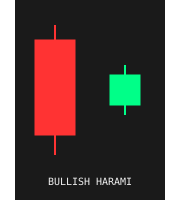
What it means: After a strong down move, a small bullish candle shows buying interest but hesitation.
Signal: Potential bullish reversal - sellers losing steam.
Nickname: "Pregnant Pause"
Signal: Potential bullish reversal - sellers losing steam.
Nickname: "Pregnant Pause"
Learn · 2/5
BEARISH HARAMI
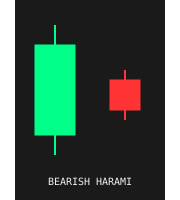
What it means: After a strong up move, a small bearish candle shows selling interest but hesitation.
Signal: Potential bearish reversal - buyers losing steam.
Nickname: "The Pause Before the Storm"
Signal: Potential bearish reversal - buyers losing steam.
Nickname: "The Pause Before the Storm"
HARAMI CROSS
Harami cross: a large candle followed by a doji that sits entirely inside its body.
What it means: The second candle is a Doji, showing even more indecision.
Signal: Stronger reversal signal than regular Harami.
Signal: Stronger reversal signal than regular Harami.
Learn · 3/5
INSIDE BAR (Western Term)
An "Inside Bar" is the Western equivalent of Harami. The second bar's entire range (high to low) is contained within the first bar.
Trading Strategy:
- Wait for breakout above/below the mother candle
- Direction of breakout = trade direction
- Stop loss: Other side of the pattern
Trading Strategy:
- Wait for breakout above/below the mother candle
- Direction of breakout = trade direction
- Stop loss: Other side of the pattern
Learn · 4/5
HIKKAKE PATTERN
A Hikkake is a FAILED inside bar:
1. Inside bar forms
2. Price breaks one direction
3. Then REVERSES and breaks the other direction
Signal: Very reliable because it trapped traders on the fake breakout.
Nickname: "The Trap" or "Fakeout Pattern"
1. Inside bar forms
2. Price breaks one direction
3. Then REVERSES and breaks the other direction
Signal: Very reliable because it trapped traders on the fake breakout.
Nickname: "The Trap" or "Fakeout Pattern"
Watch out
Harami patterns are WEAKER than engulfing patterns. They suggest hesitation, not conviction. Always wait for confirmation.
Learn · 5/5
Key takeaways
- Harami = second candle body is completely inside first candle body
- Shows hesitation and potential reversal
- Harami Cross (with Doji) is stronger than regular Harami
- Hikkake is a failed inside bar - trades the reversal of the fakeout
Next: 5 quick exercises. Miss one and it comes back at the end.